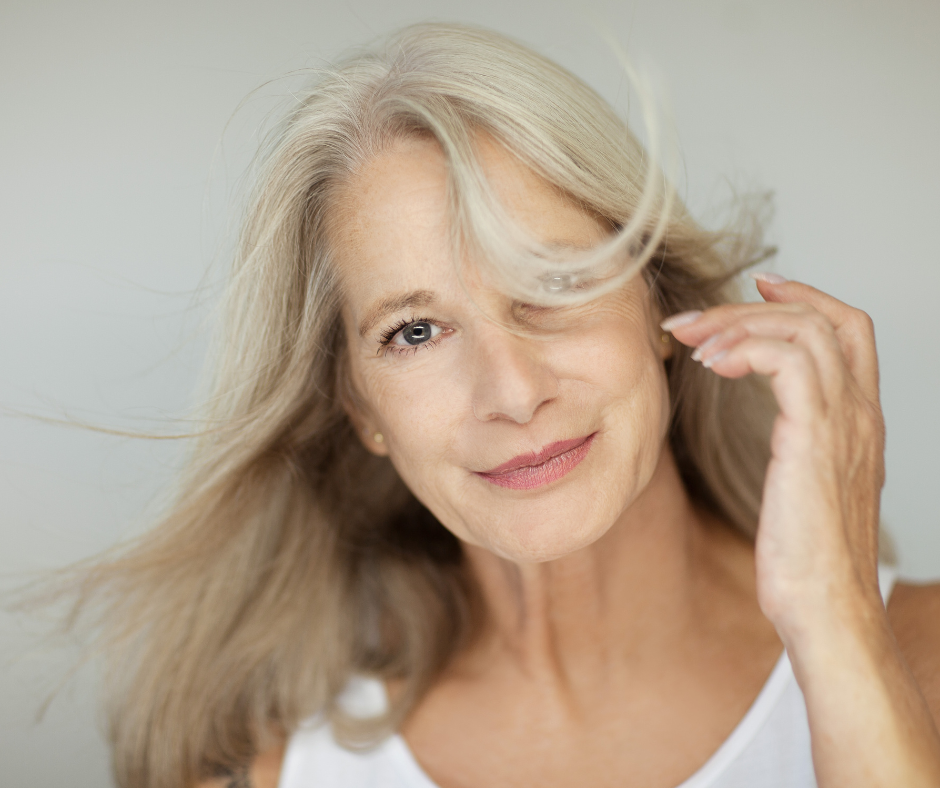
Menopausal alopecia This is a common problem linked to the hormonal changes taking place in a woman’s body. A drop in oestrogen levels can affect the hair growth cycle, the structure of the hair, and the overall condition of the scalp and hair follicles.
Oestrogens play a significant role in the normal functioning of the hair, amongst other things by supporting the anagen phase, i.e. the active period of hair growth. As oestrogen levels decline during the menopause, the hair growth phase becomes shorter, and androgens, as well as the individual sensitivity of hair follicles to their effects, may become more significant.
As a result, some post-menopausal women experience gradual hair thinning, a reduction in hair volume and a weakening of the hair structure. These changes most commonly affect the crown of the head and may develop slowly.
Treatment of alopecia During the menopause, it is important to identify the cause of the problem and assess the condition of the scalp and hair follicles. An appropriately tailored treatment plan can help reduce excessive hair loss and support an improvement in hair quality.
Find out which treatment plan will work best for you
Body contouring • Weight loss • Aesthetic medicine • Acne treatment Laser hair removal • Hair loss treatment • Snoring treatment