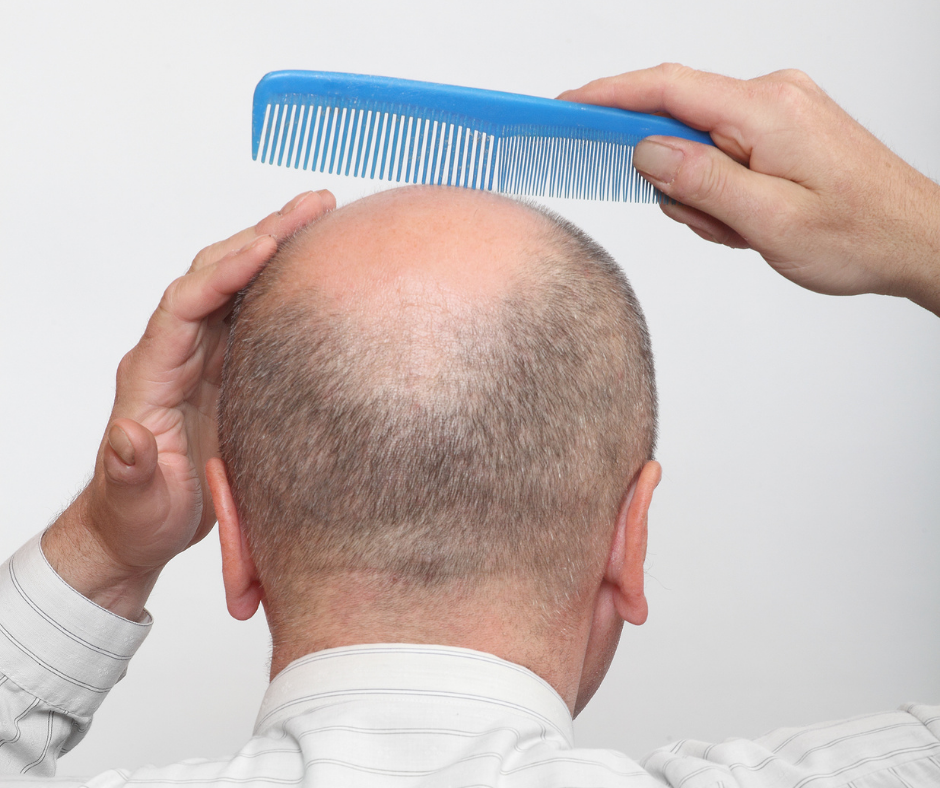
Androgenetic alopecia It is the most common cause of chronic hair loss. It affects over 80% men and around 42% women. Its development is primarily linked to a genetic predisposition of the hair follicles and their excessive sensitivity to androgens, in particular dihydrotestosterone (DHT).
Under the influence of DHT, the hair follicles gradually become miniaturised. The hair becomes thinner, weaker and shorter, and its growth phase is shortened. This process occurs gradually, which is why it may initially only be noticeable as increased hair loss or a reduction in hair density.
In men androgenetic alopecia It most commonly affects the temporal regions, causing receding hairlines, as well as the crown of the head. In women, hair thinning is usually observed in the central part of the scalp, whilst the hairline at the forehead remains intact.
Assessing the severity of the changes requires appropriate diagnostic tests, including trichological examination, which helps to assess the condition of the scalp and the state of the hair follicles. Early diagnosis of the problem enables the prompt implementation of a treatment plan aimed at limiting further hair thinning.
Effective treatment of alopecia This should be preceded by a thorough diagnosis to identify the cause of excessive hair loss and select the appropriate treatment.
Find out which treatment plan will work best for you
Body contouring • Weight loss • Aesthetic medicine • Acne treatment Laser hair removal • Hair loss treatment • Snoring treatment